



News, Blogs & Videos
Zoos SA
Find out if a new animal has arrived, we lose an old favourite or are trying to pair animals up for breeding.
Feed Link:
Categories
- Adelaide Zoo
- Monarto Zoo
- Warrawong
- Conservation Ark
- Births, Deaths & Marriages
- Wildlife Vets & Nurses
- Giant Pandas
- Media Release
Archive
- December 2008
- January 2009
- February 2009
- March 2009
- April 2009
- May 2009
- June 2009
- July 2009
- August 2009
- September 2009
- October 2009
- November 2009
- December 2009
- January 2010
- February 2010
- March 2010
- April 2010
- May 2010
- June 2010
- July 2010
- August 2010
- September 2010
- October 2010
- November 2010
- December 2010
- January 2011
- February 2011
- March 2011
- April 2011
- May 2011
- June 2011
- July 2011
- August 2011
- September 2011
- November 2011
- December 2011
- January 2012
- February 2012
- March 2012
- April 2012
- July 2012
Blog Archive
Diary of a Palm Cockatoo (part 1)
We recently had a very exciting “hatch” at Adelaide Zoo, with the arrival of a little Palm Cockatoo chick on 5 October. This little chick is the first one to be successful reared in Australia since 1973.
We were very exciting to find a fertile egg as we weren’t sure whether our pair were capable of breeding. Ben (our male) is a rescued bird, who was hand reared and then sent to us to socialise with other Palm Cocktatoos as we are the only zoo in Australia to hold them. Our records also show our female was either imported to Adelaide Zoo in 1948 or hatched here before 1959, meaning she is an old bird.
In the first few weeks, the chick was basically a digestive tract equipped with what it needed to be fed and digest food, with the aim of increasing the size of its little body. The chick does not have any down and won't grow any which is due to the fact that these birds are found in far North Queensland where the temperatures are a little more balmy than those we experience here in Adelaide in spring and winter. Unfortunately the lack of down leaves us with a baby that only its mother could love and also one that requires an artificial heat source for much longer than downy chicks would require.
However as the body grows it has also developed. The eyes began opening at around ten days old and the first signs of feather development were visible under the skin at 18 days. The last feathers to develop will be the tail and finally the feathers around the crop as these would become fouled by food and faeces in the nest. The feathers haven't started opening yet but I have already noticed some preening behaviour. There is also a bit more personality developing now and the chick has great muscle control of the little pin feathers that will become a magnificent crest and can also blush the facial skin slightly usually during and after feeding.
Stay tuned for more.
Trena
Bird Keeper, Adelaide Zoo

Comments
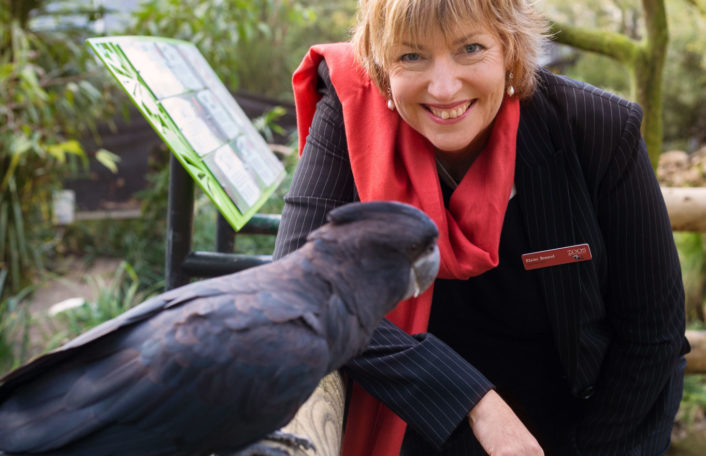
My son and I became members the other day in part because the cockatoo befriended my son and snuggled up to him.
Cheers,
Paul R
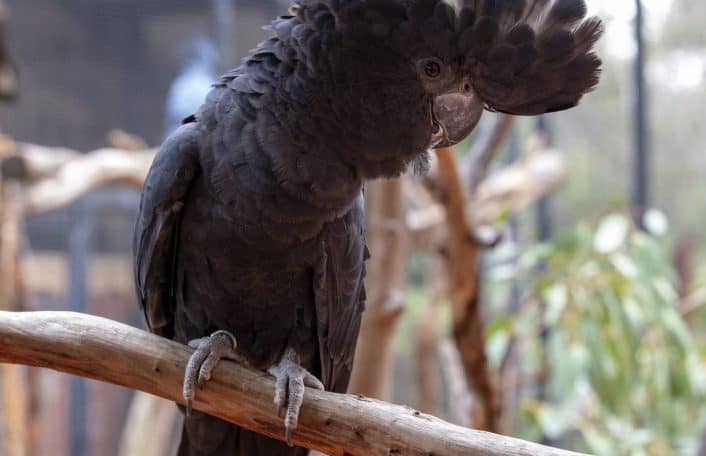
The Palm Cocky chick is the offspring of the friendly Palm cocky that you may have seen whilst waiting in the Panda queue. The Black Cockatoo in the Wetlands walkthrough aviary is actually a Red-tailed Black-cockatoo. Depending on how long ago your visit was this bird could have been Jimmy who was moved to the aviary near the Ladies loo around 2 months ago or Banks who replaced him almost straight away.
Cheers,
Trena
Post a Comment