




News, Blogs & Videos
Zoos SA
Find out if a new animal has arrived, we lose an old favourite or are trying to pair animals up for breeding.
Feed Link:
Categories
- Adelaide Zoo
- Monarto Zoo
- Warrawong
- Conservation Ark
- Births, Deaths & Marriages
- Wildlife Vets & Nurses
- Giant Pandas
- Media Release
Archive
- December 2008
- January 2009
- February 2009
- March 2009
- April 2009
- May 2009
- June 2009
- July 2009
- August 2009
- September 2009
- October 2009
- November 2009
- December 2009
- January 2010
- February 2010
- March 2010
- April 2010
- May 2010
- June 2010
- July 2010
- August 2010
- September 2010
- October 2010
- November 2010
- December 2010
- January 2011
- February 2011
- March 2011
- April 2011
- May 2011
- June 2011
- July 2011
- August 2011
- September 2011
- November 2011
- December 2011
- January 2012
- February 2012
- March 2012
- April 2012
- July 2012
Blog Archive
Our Hyacinth Macaws
I will be the first to admit that I’m not the brightest when it comes to early mornings…when that alarm goes off I struggle to awake from my precious slumber. Even by the time I get to work, my ritual of strong coffee sometimes doesn’t have the desired effect and my eyelids feel as though they may need the assistance of toothpicks to hold them open.
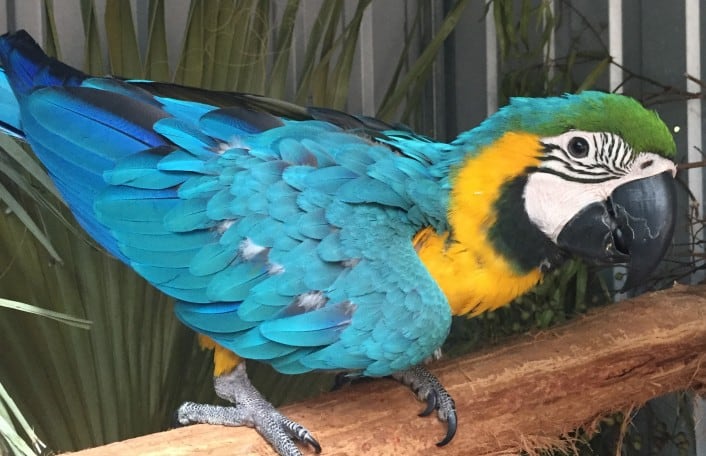
This has all changed however, with the arrival of two spritely, young South American chaps that have taken up permanent residence within our new South American bird aviary. The two beautiful Hyacinth Macaws have finally been cleared to come onto display, and haven’t they made an entrance into the public world! Whilst striking in colour, their very loud, raucous call ensures that I (and perhaps the rest of the creatures nearby) are quickly woken up in the mornings now.
These stunning birds are native to Brazil, are the largest of the 17 Macaw species, and the largest flying parrot in the world. Reaching almost 3 feet in length and having a wingspan of almost 2 feet, you would be left in awe if you were lucky enough to see one fly overhead in jungles of Brazil. They have extremely strong beaks which enable them to crack open the hardest of nuts with effortless ease. They also like to feast on a variety of fruits and seeds as they come into season too.
Unfortunately, their appearance makes them a favored target for international trade and their feathers have been used for traditional headpieces by local tribe members. Combine this with a dramatic loss of habitat in land clearing, logging and hydroelectric projects, it means their population numbers have steadily declined over recent years and left them with an ENDANGERED status. It is estimated there are about 6000 left in the wild.
Fortunately, there are a number of projects that are currently undertaking vital research of the Hyacinth Macaws in their natural habitat. This information will assist greatly in being able to provide viable solutions to the problems, and ultimately ensure a sustainable natural population.
The best thing you can do is come in and visit the birds yourself! They have settled in extremely well, and have many other characters to share their aviary with. Sun conures, Yellow-crowned Amazons, Red-bellied Macaw and more…a variety of bright, beautiful and occasionally talkative South/Central American parrots will certainly inspire you! From this, admiration of these birds will arise and it is my belief that positive action always comes from true appreciation.
Kristal
Bird Keeper, Adelaide Zoo

Comments
Post a Comment