Over the years Zoos SA has been involved in a wide range of conservation programs. Our efforts have spanned the globe and include captive breeding, habitat restoration, biological surveys, contributing to insurance populations, studies in reproductive biology, conservation education, corporate and community fundraising, wildlife disease management, translocation and community development to foster alternative livelihoods.
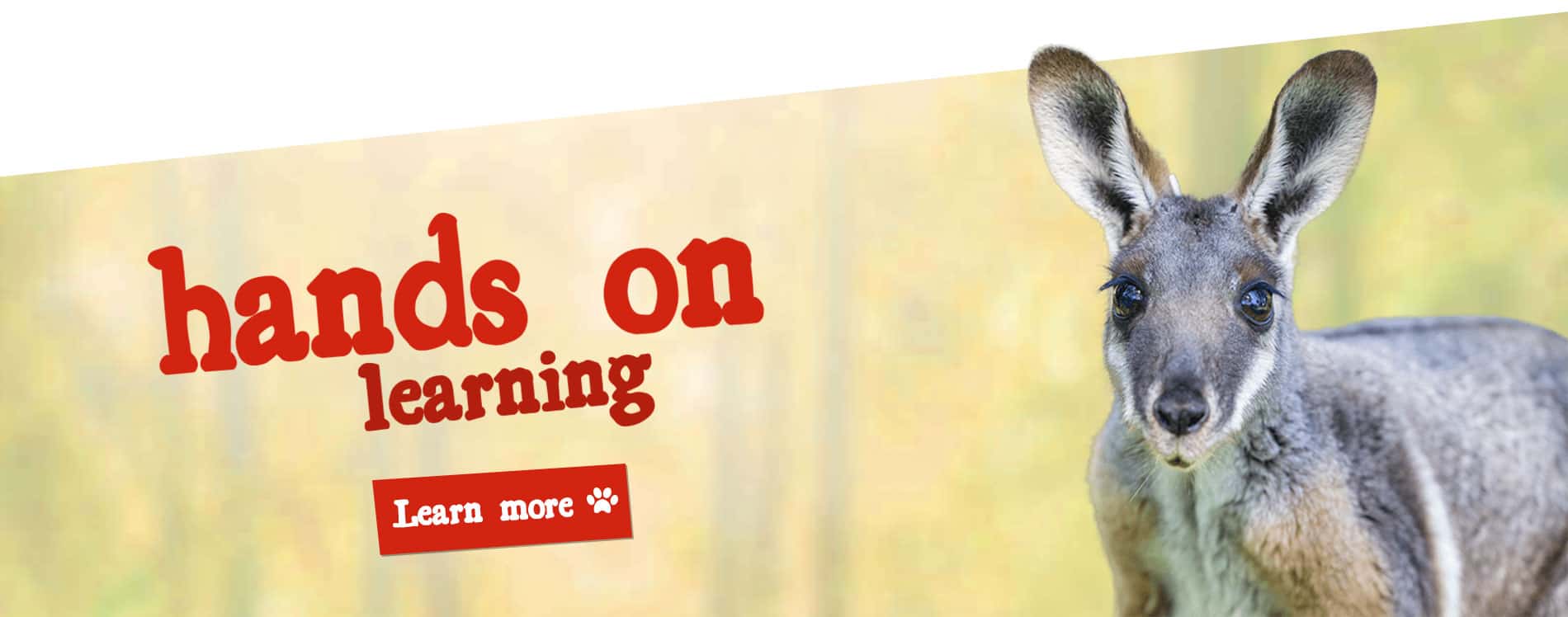
Zoos SA has been at the forefront of an animal breeding technique called cross-fostering to save endangered wallaby species. Cross fostering involves transferring the pouch young from a threatened species into the pouch of a surrogate mother from a similar common species. This enables the mother to be freed up to produce another pouch young and increase the amount of offspring one particular female can produce in a year.
Our cross-fostering and reintroduction work has enabled staff, students and partner organisation gain valuable skills, helped Zoos SA gain a reputation as a conservation organisation and importantly deliver a range of conservation outcomes both within the zoo and beyond our gates. Since the reintroduction of Yellow-footed Rock-wallabies into the Aroona Sanctuary in 1996 much has been learnt and conservation has been an increasing focus for Zoos SA.
Working with community is a key feature of Zoos SA conservation work. Zoos SA recognises the fundamental front line role that communities play in species and habitat conservation, which is demonstrated in the community engagement approach that all of our conservation projects take.
Conservation Programs
Over the years Zoos SA has been involved in a wide range of conservation programs. Our efforts have spanned the globe and seen positive conservation outcomes for many species at a local, regional and international level.
We are committed to safeguarding wildlife and habitats in our own back yard, regionally and across the globe. To achieve positive conservation outcomes we run and participate in field work, research programs, breeding programs, education and calls to action campaigns at local, regional and international levels.
Create a world where people are aware of the irreplaceable value of our wildlife and act to minimise harm and maximise positive conservation outcomes for species in our own back yard and across the globe.
Our conservation efforts have spanned the globe and our staff contribute to positive conservation outcomes through our conservation and sustainability programs in addition to managing and participating in captive breeding and species management programs.
Environmental sustainability is living within the limits of what the environment can provide. It’s about understanding the many interconnections between the economy, society, the environment and the equal distribution of resources and opportunities. Learn how you can reduce your carbon footprint and help wildlife.