






Zoos SA
Bird flu and what it means for your visit: Learn about the precautionary measures we're taking and what to expect during your visit.

Planting instructions.

Sowing

Timing: Sow seeds in early spring for a continuous bloom from late spring through autumn.

Method: Sow seeds directly into prepared soil, lightly covering them with a fine layer of soil. Fill punnets or trays with a good quality seed-raising mix, sow seeds lightly on the surface, and lightly cover with a fine layer of mix.

Depth: Strawflower seeds need light to germinate, so don’t bury them deeply.

Watering: Mist or bottom water to avoid dislodging the seeds.

Light: Ensure the seeds receive adequate light for germination.

Temperature: The ideal soil temperature for sowing is 18-21°C.

Germation

Time: Germination typically occurs within 7-14 days.

Conditions: Keep the soil moist but not waterlogged.

Troubleshooting: If germination fails, ensure the soil is moist, there’s enough light, and the temperature is within the optimal range.

Transplanting

Timing: Transplant seedlings to their final location once they have their first true leaves and are large enough to handle (usually 5-10cm tall).

Spacing: Space plants 40-60cm apart.

Care

Sunlight:Everlasting daisies thrive in full sun.

Watering: Water regularly, especially during dry periods.

Soil: Ensure the soil is well-drained.

Pests and Diseases: Keep an eye out for common pests and diseases and take appropriate action if necessary.

Deadheading: Deadhead spent flowers to encourage further blooms.

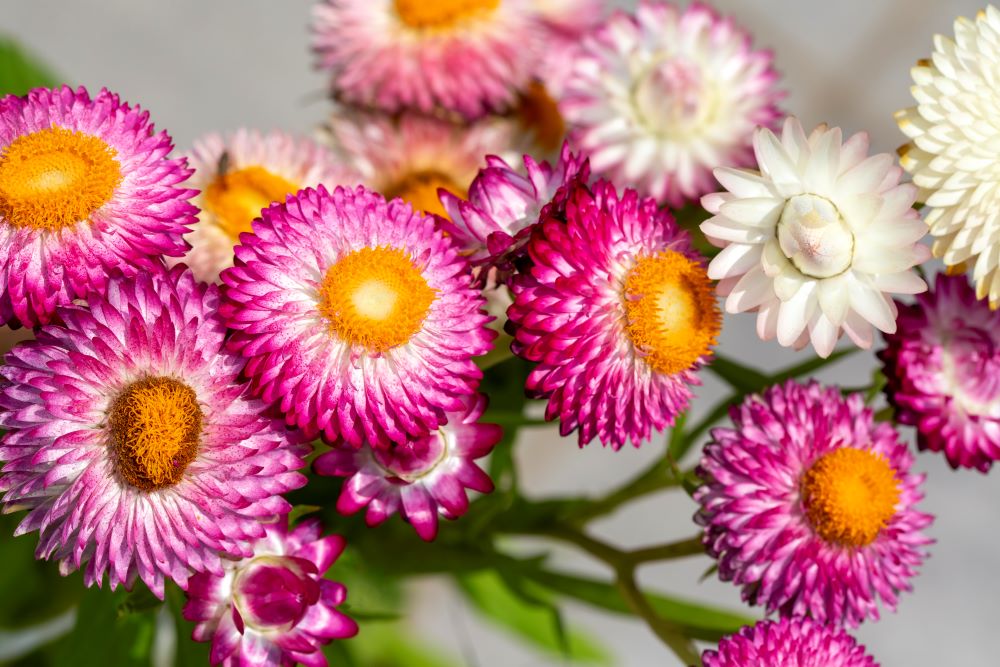
Strawflowers can be sown in the less formal ‘scatter seed’ method.

About Zoos SA

Zoos SA is a not-for-profit conservation charity that exists to connect people with nature and save species from extinction. Zoos SA acknowledges the Country on which we stand always was, and always will be, Aboriginal land and we pay our deepest respect and gratitude to Kaurna (Adelaide Zoo) and Ngarrindjeri (Monarto Safari Park) Elders, past, present and emerging. We undertake critical conservation work throughout Australia and acknowledge the traditional custodians of these lands.

Sign Up to Our Newsletter

Stay up to date with zoo news and sign up to our Zoo Times eNewsletter